Saturday, July 9, 2011
10 of the Most Common and Romantic Flowers with their Respective Meanings
0 comments Posted by org at 9:32 AM
Any good florist will know the meaning of the flowers, so if buying through a florist tell them the message you want to send and they will advise you on which flowers are appropriate.
Here's Top 10 of the Most Common and Romantic Flowers with their Respective Meanings
10 - Iris
Blue is faith and hope, purple means compliments or wisdom, white is purity and yellow is passion.
9 - Acacia
Unspoken love, send these if you want to let someone know of your secret admiration.
8 - Primrose
I can’t live without you (evening primose means happy in love).
7 - Lilac
Represents youthful or humility, also confidence.
6 - Carnation
Fascination. Pink is maternal love, striped carnations mean refusal and say you cannot be with someone, yellow is rejection or disappointment but red means my heart aches for you or I am fascinated with you.
5 - Orchid
Rare beauty, refinement, beautiful woman, long life, femininity or mature charm.
4 - Lily
White is purity or virginity, yellow means walking on air but also falsehood and orange means I burn for you.
3 - Tulip
Red is a declaration of love, multicolored means you have beautiful eyes and yellow is hopelessly in love.
2 - Daisy
Mostly represents innocence or a loyal love.
1 - Rose
Red roses say "I love you" but if you place red and white roses together it symbolises perfect unity. A thornless rose means "loved you at first sight". Each colour of rose has a different meaning but for love red is the only colour to send.

- Reference/Source: Country-couples.co.uk[Jul 6, 2008]
Saturday, July 2, 2011

There are many, many waterfalls in the world. After all, the vast majority of our planet is covered in water. When land interrupts the flow of water across the landscape, it is here that waterfalls can form.
Interestingly enough there is no standard definition of a waterfall in the modern lexicon. By this we mean there is nothing to define what makes up a waterfall, how to measure a waterfall, and even whether or not a waterfall needs to exist the entire year round. To the objective tourist these debated ideas are mere semantics compared to standing in plain view of the water thundering over high cliff faces with enough force to pound the local geography into new shapes and forms. Many waterfalls are thought to be inspiration for many functional and decorative garden fountains.
According to world-of-waterfalls.com and I totally agree ,it's not easy to put together a Top 10 Best Waterfalls List because it's completely subjective and limited to each person's experience with the falls being named.
This is by no means a permanent list and it's sure to change as we continue to collect more falls from around the world. So without further adieu, here they are in reverse order...
Here's Top 10 of the World's Most Beautiful Waterfalls
10 - SUTHERLAND FALLS [Fiordland, New Zealand]
In a country that holds a special place in our hearts, this gorgeous 580m waterfall is easily New Zealand's most spectacular waterfall and makes our list. Given its remote location deep in the wild and beautiful Fiordland National Park (also a World Heritage Area), it's one of many highlights of the Milford Track - said to be one of the finest walks in the world.

9 - DETTIFOSS [Jökulsárgljúfur, Iceland]
It is Europe's most powerfull waterfall sending glacial meltwaters over its 44m precipice unchecked at a flow of around 500 cubic meters per second. It epitomizes the wild and raw Icelandic Nature and is a favorite amongst Icelandic Nature lovers. Its position at the head of the impressive Jökulsárgljúfur (the Icelandic version of the Grand Canyon) surrounded by three other major waterfalls on the same river makes it a no-brainer for this to make our Top 10 Waterfalls List.

8 - GULLFOSS [Haukadalur, Iceland]
One of the more unique waterfalls you'll ever see in the world, this wild and wide waterfall tumbling on the Hvítá River in two tiers at 90 degree angles to each other is one of Iceland's iconic natural attractions. Part of the Golden Circle of Iceland's main attractions in the Southwest, this is a must on anyone's itinerary. In addition to the falls' unique shape, you can see rainbows arcing over the falls when your timing's right and the weather cooperates.

7 - KAIETEUR FALLS [Potaro River, Guyana]
Said to be one of the tallest single-drop waterfalls in the world, this rectangular-shaped monster (said to be 741ft tall 370ft wide) sits atop the ancient Guyana Shield amidst some of the most pristine rainforest left on earth! Indeed a visit to this world wonder can yield rare wildlife settings as well as the reassurance that there are still places on the planet where nature is still allowed to thrive. Thus, Julie and I had to make room for this waterfall on our Top 10 List!

6 - YOSEMITE FALLS [California, USA]
Even though this waterfall doesn't flow year round, it does flow for a good part of the year and it's one of the tallest in the world at 2425ft. It's the crown jewel of attractions in the incomparable Yosemite Valley and it's easily seen from a multitude of viewpoints and trails. So given its ease of access, scenery, and sheer size, this waterfall makes our Top 10 Waterfalls List.

5 - ANGEL FALLS (SALTO ÁNGEL) [Canaima, Venezuela]
Plunging uninterrupted for 807m (with total drop of 979m) from a mystical tabletop mountain (tepuy) deep in a Venezuelan equatorial rainforest, it is widely acknowledged as the tallest permanent waterfall in the world. Its existence defies logic as its source is nothing but the soggy cloud forest on the plateau of the tepuy. No doubt about it, there's nothing like this waterfall and the adventure to even get to this so-called Lost World (Mundo Perdido) for a chance to see this world wonder is sure to leave you with a lasting impression.

4 - PLITVICE WATERFALLS [Northern Dalmatia, Croatia]
When it comes to the overall waterfalling experience, it's hard to beat this world famous attraction. While the rest of the waterfalls on our Top 10 List are primarily singular waterfall attractions, this one is really a network of countless waterfalls (some of which are impressive enough to stand out on their own). The waterfalls themselves segregate the many clear and colorful lakes that bring life to this lush and protected ecosystem. Plus, you have boardwalks that take you under, over, and around almost all of the notable waterfalls for some of the most intimate waterfalling experiences to be had. Add it all up, putting these waterfalls on this list was an absolute no-brainer as far as Julie and I were concerned.

3 - NIAGARA FALLS [Ontario, Canada/New York, USA]
Easily the most famous waterfall in North America, this powerful waterfall also ranks as the biggest one by volume with a whopping average of about 750,000 gallons per second (2.8 million Liters per second)! In addition to its raw power, the falls is easily one of the easiest to access and view from all sorts of angles. While its surroundings are a bit less naturesque for many, it clearly makes the upper tier of our list of Top 10 Waterfalls.

2 - VICTORIA FALLS (MOSI-OA-TUNYA) [Livingstone, Zambia/Victoria Falls, Zimbabwe]
Easily deserving of the top spot on this list (though it finished a very close second), it's the largest singular waterfall in the world spanning a width of 1.7km, a height of 108m, and an average flow of 1 million liters per second! It's no wonder this "smoke that thunders" is considered one of the seven natural wonders of the world and is a UNESCO World Heritage site. Indeed, it's got power, beauty, and it will make you humble and awestruck.

1 - IGUAZU FALLS (IGUASSU FALLS) [Puerto Iguazú, Argentina/Foz do Iguaçu, Brazil]
With its brink spanning a distance of an incredible 2km in its average flow of 1.3 million liters per second, this falls tops our list of favorites. The falls actually consists of some 275 individual waterfalls and cascades. Catwalks make it easy to get closeup and intimate views and the rainforest surroundings make the scenery feel right for a natural attraction such as this. Put it all together and Julie and I believe this falls is heads and shoulders above the rest (except Victoria Falls) that we've seen!

- Reference/Source: World-of-waterfalls.com
Thursday, June 9, 2011
There is something neat about small animals. Even Hollywood's elite enjoy carrying around the diminutive Chihuahuas as a symbol of their status. Whether it's because they look like a baby version of their larger ancestor or because they are so odd, small creatures often attract attention from people.
1 - World’s Smallest Dog: 12.4 cm (4.9-inch) tall
At 1.4 pounds and 4.9 inches tall, Ducky, a yappy short-coat Chihuahua from Charlton (Massachusetts, USA), holds the Guinness World Record for the world's smallest living dog (by height). Ducky succeeds Danka Kordak of Slovakia, a Chihuahua who measured 5.4 inches tall. The smallest dog ever, according to Guinness, was a dwarf Yorkshire terrier who stood 2.8 inches tall.

2 - World's Smallest Snake: 10.1 cm (4-inch) long
Leptotyphlops carlae is the world's smallest species of snake, with adults averaging just under four inches in length. Found on the Caribbean island of Barbados, the species --which is as thin as a spaghetti noodle and small enough to rest comfortably on a U.S. quarter-- was discovered by Blair Hedges.

3 - World’s Smallest Fish: 7.9 mm (0.3-inch) long
On January 2006, the world's smallest fish was discovered on the Indonesian island of Sumatra: a member of the carp family of fish, the Paedocypris progenetica. It is the world's smallest vertebrate or backboned animal; only 7.9 mm (0.3 inches) long.
The title, however, is contested by 6.2 mm (0.2 in) long male anglerfish Photocorynus spiniceps (not technically a fish but a sexual parasite) and the 7 mm (0.27 in) long male stout infantfish Schindleria brevipinguis.

4 - World’s Smallest Horse: 43.18 cm (17-inch) tall
The little horse was born to Paul and Kay Goessling, who specialize in breeding miniature horses, but even for the breed Thumbelina is particularly small: she is thought to be a dwarf-version of the breed. At just 60 lb and 17-inch tall, the five-year-old Thumbelina is the world’s smallest horse.

5 - World’s Smallest Cat: 15.5 cm (6.1-inch) high and 49 cm (19.2-inch) long
Meet Mr. Peebles. He lives in central Illinois, is two years old, weighs about three pounds and is the world's smallest cat! The cat's small stature was verified by the Guinness Book of World Records on 2004.

6 - World's Smallest Hamster: 2.5 cm (0.9-inch) tall
Only slightly bigger than a 50p piece, PeeWee is the smallest hamster in the world. Weighing less than an ounce, the golden hamster stopped growing when he was three weeks old - his five brothers and sisters went on to measure between 4in and 5in.

7 - World's Smallest Chameleon: 1.2 cm (0.5-inch) long
The Brookesia Minima is the world's smallest species of chameleon. This one is just half an inch. Found on the rainforest floor of Nosy Be Island off the north-west coast of Madagascar, females tend to be larger than males.

8 - World's Smallest Lizard: 16 mm (0.6-inch) long
So small it can curl up on a dime or stretch out on a quarter, a typical adult of the species, whose scientific name is Sphaerodactylus ariasae is only about 16 millimeters long, or about three quarters of an inch, from the tip of the snout to the base of the tail. It shares the title of "smallest" with another lizard species named Sphaerodactylus parthenopion, discovered in 1965 in the British Virgin Islands.

9 - World’s Smallest Cattle: 81 cm (31-inch) height
The world’s smallest cattle is a rare breed of an Indian zebu called the Vechur cow. The average height of this breed of cattle is 31 to 35 inches (81 to 91 cm). The photo above shows a 16 year old Vechur cattle as compared to a 6 year old HF cross-breed cow.

10 - World's Smallest Seahorse: 16 mm (0.6-inch) long
The creature, known as Hippocampus denise, is typically just 16 millimetres long - smaller than most fingernails. Some were found to be just 13 mm long. H. denise lives in the tropical waters of the western Pacific Ocean, between 13 and 90 metres beneath the surface.

- Reference/Source: Oddee.com [10/30/2008]
Saturday, May 7, 2011
If wild animals could participate in the Olympics, the land animals of the wild would outrun any human. Most animals use their speed when overpowering prey or escaping a predator.
The following maximum speed measurements "are based on measurements recorded over approximately quarter-mile distances. Exceptions are the lion, which was clocked in the act of charging, and the cheetah, which was measured over a 100-yard distance," notes the TravelAlmanac.com.
1 - Cheetah
The world's fasted land animal is the cheetah. The cheetah has an "acceleration that would leave most automobiles in the dust; a cheetah can go from 0 to 60 mph in only 3 seconds," according to the National Geographic. This large cat has exceptional eyesight to scan for prey. The sleek and flexible spotted body of a cheetah provides camouflage for dry grasslands in Southern and East Africa, where about 12,000 endangered wild cheetahs exist.

2 - Pronghorn Antelope
For more than a million years, the pronghorn antelope has roamed North America. "The running gait of the pronghorn is beautifully smooth and their powerful legs can carry them at a remarkable pace across the roughest kind of terrain. Pronghorns can reach speeds of 60 mph," notes the National Park Service.

3 - Lion
Lions roam grassy plains and open woodlands of the sub-Saharan region. Lions may be as long as 48 inches and weigh up to 500 pounds. When looking for prey the lion can reach speeds as fast as 50 mph.

4 - Thomson's Gazelle
The Thomson's gazelle roams the grasslands and open plains of northern Tanzania and southern Kenya. This gazelle weighs 35 to 55 pounds and is exceptionally alert to sounds and movements, and its fine sense of hearing, sight and smell balances its vulnerability on the open plains, according to the Out to Africa website. The Thomson's gazelle is able to run 50 mph.

5 - Wildebeest
The wildebeest belongs to the antelope family. The Afrikaans began calling the gnu the wildebeest because it had a shaggy mane, sharp horns, pointed beard and a huge head. Wildebeest can weigh as much as 600 pounds and run as fast as 50 mph. The wildebeest roams the woodlands and plains of sub-Saharan Africa.

6 - Springbok
A springbok may reach a speed of 50 mph. The springbok's main predators consist of leopards, lions, humans and lions. This reddish-brown, small antelope may leap up to 13 feet. This South African animal lives in semiarid and grassland regions.

7 - Quarter Horse
The quarter horse has heavy muscling, a stocky built and a compact appearance. This well-defined horse can sprint 47.5 mph. "Quarter horses are quick, balanced and agile. They are collected in action and stand at ease with their legs well under them. They are even-headed, kind, surefooted and steady," notes the Ultimate horse Site.

8 - Cape Hunting Dog
Identified by a distinctive coat of black, red, white and yellow, the Cape hunting dog reaches speeds of 45 mph. The Cape hunting dog travels in pack of six to 20 animals. A pack of these dogs may pursue large prey, such as antelope and wildebeest, especially if injured or sick.

9 - Elk
In North America, the elk is the largest deer. The wapiti is another name for the elk, which means "light-colored deer." The elk can go as fast as 45 mph when it needs to avoid danger. The elk is a massive animal; therefore most animals do not bother the elk. An elk's antlers may grow up to 4 feet, making the tip of the animal's horns as high as 9 feet off the ground.

10 - Coyote
The coyote runs up to 40 mph. Coyotes are able to adapt to North America's changing landscape. These clever animals eat rodents, fish, frogs, deer and snakes. With their keen sense of smell and strong vision, this member of the dog family typically forms a pack with other coyotes to hunt prey together in the fall and winter months.

- Reference/Source: nachocelebrity.blogspot.com [Tuesday, January 18, 2011]
- Reference/Source: nationalgeographic.com
- Reference/Source: TravelAlmanac.com
Have you ever wonder why some creatures do really have long life? I find this 10 list from a blog and it's amazing to find out that there really are immortal animals. Secret to long life? Probably!
There are tortoises alive today that were 25 to 50 years old when Charles Darwin was born. There are whales swimming the oceans with 200-year-old ivory spear points embedded in their flesh. There are cold-water sponges that were filter-feeding during the days of the Roman Empire. In fact, there are a number of creatures with life spans that make the oldest living human seem like a spring chicken in comparison. Here’s our list of the 10 animals with the longest life spans.
1 - Geoducks
First on the list are these large saltwater clams that are native to the Puget Sound and have been known to live for at least 160 years. They are characterized by their long ‘necks’, or siphons, which can grow to over 1 meter long.

2 - Tuataras
The word “dinosaur” is commonly used to describe an old person, but when it refers to a tuataras, the term is as literal as it is metaphorical. The two species of tuatara alive today are the only surviving members of an order which flourished about 200 million years ago — they are living dinosaurs. They are also among the longest-lived vertebrates on Earth, with some individuals living for anywhere between 100 and 200 years.

3 - Lamellibrachia tube worms
These colorful deep sea creatures are tube worms (L. luymesi) that live along hydrocarbon vents on the ocean floor. They have been known to live 170 years, but many scientists believe there may be some that have lived for more than 250 years.

4 - Red sea urchins
The red sea urchin or Strongylocentrotus franciscanus is found only in the Pacific Ocean, primarily along the West Coast of North America. It lives in shallow, sometimes rocky, waters from the low-tide line down to to 90 meters, but they stay out of extremely wavy areas. They crawl along the ocean floor using their spines as stilts. If you discover one, remember to respect your elders — some specimens are more than 200 years old.

5 - Bowhead whales
Also known as the Arctic whale, the bowhead is by far the longest living mammal on Earth. Some bowhead whales have been found with the tips of ivory spears still lodged in their flesh from failed attempts by whalers 200 years ago. The oldest known bowhead whale was at least 211 years old.

6 - Koi
Koi are an ornamental, domesticated variety of the common carp. The are common in artificial rock pools and decorative ponds. Amazingly, some varieties are capable of living more than 200 years. The oldest known koi was Hanako, a fish that died at the age of 226 on July 7, 1977.

7 - Tortoises
Tortoises are considered the longest living vertebrates on Earth. One of their oldest known representatives was Harriet, a Galapagos tortoise that died of heart failure at the age of 175 years in June 2006 at a zoo owned by the late Steve Irwin. Harriet was considered the last living representative of Darwin’s epic voyage on the HMS Beagle. An Aldabra giant tortoise named Adwaita died at the rumored age of 250 in March 2006.

8 - Ocean quahog
The ocean quahog (Arctica islandica) is a species of clam that is exploited commercially. Researchers have interpreted the dark concentric rings or bands on the shell as annual marks, much like a tree has rings. –Some collected specimens have been calculated to be more than 400 years old.

9 - Antarctic sponge
Perhaps due to the extremely low temperatures of the Antarctic Ocean, this immobile creature has an extremely slow growth rate. Some estimate the oldest known specimens are 1,550 years old.

10 - Turritopsis nutricula jellyfish
This species of jellyfish might be the only animal in the world to have truly discovered the fountain of youth. Since it is capable of cycling from a mature adult stage to an immature polyp stage and back again, there may be no natural limit to its life span. Because they are able to bypass death, the number of individuals is spiking. "We are looking at a worldwide silent invasion," says Dr. Maria Miglietta of the Smithsonian Tropical Marine Institute.

- Reference/Source: nachocelebrity.blogspot.com [Tuesday, January 18, 2011]
Wednesday, May 4, 2011

1. Global Warming Cause: Carbon dioxide emissions from fossil fuel burning power plants
Our ever increasing addiction to electricity from coal burning power plants releases enormous amounts of carbon dioxide into the atmosphere. 40% of U.S. CO2 emissions come from electricity production, and burning coal accounts for 93% of emissions from the electric utility industry [EPA, pg. 10]. Every day, more electric gadgets flood the market, and without widespread alternative energy sources, we are highly dependent on burning coal for our personal and commercial electrical supply.
2. Global Warming Cause: Carbon dioxide emissions from burning gasoline for transportation
Our modern car culture and appetite for globally sourced goods is responsible for about 33% of emissions in the U.S. [EPA pg. 8] With our population growing at an alarming rate, the demand for more cars and consumer goods means that we are increasing the use of fossil fuels for transportation and manufacturing. Our consumption is outpacing our discoveries of ways to mitigate the effects, with no end in sight to our massive consumer culture.
3. Global Warming Cause: Methane emissions from animals, agriculture such as rice paddies, and from Arctic seabeds
Methane is another extremely potent greenhouse gas, ranking right behind CO2. When organic matter is broken down by bacteria under oxygen-starved conditions (anaerobic decomposition) as in rice paddies, methane is produced. The process also takes place in the intestines of herbivorous animals, and with the increase in the amount of concentrated livestock production, the levels of methane released into the atmosphere is increasing. Another source of methane is methane clathrate, a compound containing large amounts of methane trapped in the crystal structure of ice. As methane escapes from the Arctic seabed, the rate of global warming will increase significantly.
4. Global Warming Cause: Deforestation, especially tropical forests for wood, pulp, and farmland
The use of forests for fuel (both wood and for charcoal) is one cause of deforestation, but in the first world, our appetite for wood and paper products, our consumption of livestock grazed on former forest land, and the use of tropical forest lands for commodities like palm oil plantations contributes to the mass deforestation of our world. Forests remove and store carbon dioxide from the atmosphere, and this deforestation releases large amounts of carbon, as well as reducing the amount of carbon capture on the planet.
5. Global Warming Cause: Increase in usage of chemical fertilizers on croplands
In the last half of the 20th century, the use of chemical fertilizers (as opposed to the historical use of animal manure) has risen dramatically. The high rate of application of nitrogen-rich fertilizers has effects on the heat storage of cropland (nitrogen oxides have 300 times more heat-trapping capacity per unit of volume than carbon dioxide) and the run-off of excess fertilizers creates ‘dead-zones’ in our oceans. In addition to these effects, high nitrate levels in groundwater due to over-fertilization are cause for concern for human health.
6. Global Warming Effect: Rise in sea levels worldwide
Scientists predict an increase in sea levels worldwide due to the melting of two massive ice sheets in Antarctica and Greenland, especially on the East coast of the U.S. However, many nations around the world will experience the effects of rising sea levels, which could displace millions of people. One nation, the Maldives, is already looking for a new home, thanks to rising sea levels.
7. Global Warming Effect: More killer storms
The severity of storms such as hurricanes and cyclones is increasing, and research published in Nature found:
“Scientists have come up with the firmest evidence so far that global warming will significantly increase the intensity of the most extreme storms worldwide. The maximum wind speeds of the strongest tropical cyclones have increased significantly since 1981, according to research published in Nature this week. And the upward trend, thought to be driven by rising ocean temperatures, is unlikely to stop at any time soon.”
8. Global Warming Effect: Massive crop failures
According to recent research, there is a 90% chance that 3 billion people worldwide will have to choose between moving their families to milder climes and going hungry due to climate change within 100 years.
“Climate change is expected to have the most severe impact on water supplies. “Shortages in future are likely to threaten food production, reduce sanitation, hinder economic development and damage ecosystems. It causes more violent swings between floods and droughts.”" – Guardian: Global warming causes 300,000 deaths a year
9. Global Warming Effect: Widespread extinction of species
According to research published in Nature, by 2050, rising temperatures could lead to the extinction of more than a million species. And because we can’t exist without a diverse population of species on Earth, this is scary news for humans.
“Climate change now represents at least as great a threat to the number of species surviving on Earth as habitat-destruction and modification.” Chris Thomas, conservation biologist at the University of Leeds
10. Global Warming Effect: Disappearance of coral reefs
A report on coral reefs from WWF says that in a worst case scenario, coral populations will collapse by 2100 due to increased temperatures and ocean acidification. The ‘bleaching’ of corals from small but prolonged rises in sea temperature is a severe danger for ocean ecosystems, and many other species in the oceans rely on coral reefs for their survival.
“Despite the oceans’s immensity — 71 per cent of the Earth’s surface with an average depth of almost 4km (2½m) — there are indications that it is approaching its tipping point. For reefs, warming waters and acidification are closing in like a pair of jaws that threaten to make them the first global ecosystem to disappear.” – Times Online: 21st-century Noah’s Ark needed to save coral reefs from extinction
- Reference/Source: planetsave.com by Derek Markham (June 7, 2009)
Tuesday, November 30, 2010
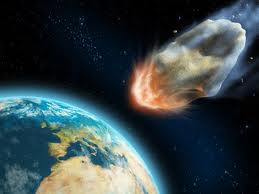 Whether it took the Earth 4.5 billion years to get to where it is today (or a mere seven days), destroying it might take a lot less time. Sam Hughes presents a host of methods for ending the planet -- and life -- as we know it. Enjoy!
10. Existence Failure
You will need: nothingMethod: No method. Simply sit back and twiddle your thumbs as, completely by chance, all 200,000,000,000,000,000,000,000,000,000,000,000,000,000,000,000,000 atoms making up the planet Earth suddenly, simultaneously and spontaneously cease to exist. Note: the odds against this actually ever occurring are considerably greater than a googolplex to one. Failing this, some kind of arcane (read: scientifically laughable) probability-manipulation device may be employed.
Utter, utter rubbish.
9. Gobbled up by strangelets
You will need: a stable strangeletMethod: Hijack control of the Relativistic Heavy Ion Collider in Brookhaven National Laboratory, Long Island, New York. Use the RHIC to create and maintain a stable strangelet. Keep it stable for as long as it takes to absorb the entire Earth into a mass of strange quarks. Keeping the strangelet stable is incredibly difficult once it has absorbed the stabilizing machinery, but creative solutions may be possible.
A while back, there was some media hoo-hah about the possibility of this actually happening at the RHIC, but in actuality the chances of a stable strangelet forming are pretty much zero.
Earth's final resting place: a huge glob of strange matter.
8. Sucked into a microscopic black hole
You will need: a microscopic black hole. Note that black holes are not eternal, they evaporate due to Hawking radiation. For your average black hole this takes an unimaginable amount of time, but for really small ones it could happen almost instantaneously, as evaporation time is dependent on mass. Therefore you microscopic black hole must have greater than a certain threshold mass, roughly equal to the mass of Mount Everest. Creating a microscopic black hole is tricky, since one needs a reasonable amount of neutronium, but may possibly be achievable by jamming large numbers of atomic nuclei together until they stick. This is left as an exercise to the reader.Method: simply place your black hole on the surface of the Earth and wait. Black holes are of such high density that they pass through ordinary matter like a stone through the air. The black hole will plummet through the ground, eating its way to the center of the Earth and all the way through to the other side: then, it'll oscillate back, over and over like a matter-absorbing pendulum. Eventually it will come to rest at the core, having absorbed enough matter to slow it down. Then you just need to wait, while it sits and consumes matter until the whole Earth is gone.
Highly, highly unlikely. But not impossible.
Earth's final resting place: a singularity of almost zero size, which will then proceed to happily orbit the Sun as normal.
Source: "The Dark Side Of The Sun," by Terry Pratchett. It is true that the microscopic black hole idea is an age-old science fiction mainstay which predates Pratchett by a long time, he was my original source for the idea, so that's what I'm putting.
7. Blown up by matter/antimatter reaction
You will need: 2,500,000,000,000 tons of antimatterAntimatter - the most explosive substance possible - can be manufactured in small quantities using any large particle accelerator, but this will take some considerable time to produce the required amounts. If you can create the appropriate machinery, it may be possible - and much easier - simply to "flip" 2.5 trillion tons of matter through a fourth dimension, turning it all to antimatter at once.
Method: This method involves detonating a bomb so big that it blasts the Earth to pieces.
How hard is that?
The gravitational binding energy of a planet of mass M and radius R is - if you do the lengthy calculations - given by the formula E=(3/5)GM^2/R. For Earth, that works out to roughly 224,000,000,000,000,000,000,000,000,000,000 Joules. The Sun takes nearly a WEEK to output that much energy. Think about THAT.
To liberate that much energy requires the complete annihilation of around 2,500,000,000,000 tonnes of antimatter. That's assuming zero energy loss to heat and radiation, which is unlikely to be the case in reality: You'll probably need to up the dose by at least a factor of ten. Once you've generated your antimatter, probably in space, just launch it en masse towards Earth. The resulting release of energy (obeying Einstein's famous mass-energy equation, E=mc^2) should be sufficient to split the Earth into a thousand pieces.
Earth's final resting place: A second asteroid belt around the Sun.
Earliest feasible completion date: AD 2500. Of course, if it does prove possible to manufacture antimatter in the sufficiently large quantities you require - which is not necessarily the case - then smaller antimatter bombs will be around long before then.
6. Destroyed by vacuum energy detonation
You will need: a light bulbMethod: This is a fun one. Contemporary scientific theories tell us that what we may see as vacuum is only vacuum on average, and actually thriving with vast amounts of particles and antiparticles constantly appearing and then annihilating each other. It also suggests that the volume of space enclosed by a light bulb contains enough vacuum energy to boil every ocean in the world. Therefore, vacuum energy could prove to be the most abundant energy source of any kind. Which is where you come in. All you need to do is figure out how to extract this energy and harness it in some kind of power plant - this can easily be done without arousing too much suspicion - then surreptitiously allow the reaction to run out of control. The resulting release of energy would easily be enough to annihilate all of planet Earth and probably the Sun too.
Slightly possible.
Earth's final resting place: a rapidly expanding cloud of particles of varying size.
Earliest feasible completion date: 2060 or so.
Source: "3001: The Final Odyssey," by Arthur C. Clarke
5. Sucked into a giant black hole
You will need: a black hole, extremely powerful rocket engines, and, optionally, a large rocky planetary body. The nearest black hole to our planet is 1600 light years from Earth in the direction of Sagittarius, orbiting V4641.Method: after locating your black hole, you need get it and the Earth together. This is likely to be the most time-consuming part of this plan. There are two methods, moving Earth or moving the black hole, though for best results you'd most likely move both at once.
Very difficult, but definitely possible.
Earth's final resting place: part of the mass of the black hole.
Earliest feasible completion date: I do not expect the necessary technology to be available until AD 3000, and add at least 800 years for travel time. (That's in an external observer's frame of reference and assuming you move both the Earth and the black hole at the same time.)
Sources: "The Hitch Hiker's Guide To The Galaxy," by Douglas Adams; SPACE.com
4. Meticulously and systematically deconstructed
You will need: a powerful mass driver, or ideally lots of them; ready access to roughly 2*10^32JMethod: Basically, what we're going to do here is dig up the Earth, a big chunk at a time, and boost the whole lot of it into orbit. Yes. All six sextillion tons of it. A mass driver is a sort of oversized electromagnetic railgun, which was once proposed as a way of getting mined materials back from the Moon to Earth - basically, you just load it into the driver and fire it upwards in roughly the right direction. We'd use a particularly powerful model - big enough to hit escape velocity of 11 kilometers per second even after atmospheric considerations - and launch it all into the Sun or randomly into space.
Alternate methods for boosting the material into space include loading the extracted material into space shuttles or taking it up via space elevator. All these methods, however, require a - let me emphasize this - titanic quantity of energy to carry out. Building a Dyson sphere ain't gonna cut it here. (Note: Actually, it would. But if you have the technology to build a Dyson sphere, why are you reading this?) See No. 6 for a possible solution.
If we wanted to and were willing to devote resources to it, we could start this process RIGHT NOW. Indeed, what with all the gunk left in orbit, on the Moon and heading out into space, we already have done.
Earth's final resting place: Many tiny pieces, some dropped into the Sun, the remainder scattered across the rest of the Solar System.
Earliest feasible completion date: Ah. Yes. At a billion tons of mass driven out of the Earth's gravity well per second: 189,000,000 years.
Source: this method arose when Joe Baldwin and I knocked our heads together by accident.
3. Pulverized by impact with blunt instrument
You will need: a big heavy rock, something with a bit of a swing to it... perhaps MarsMethod: Essentially, anything can be destroyed if you hit it hard enough. ANYTHING. The concept is simple: find a really, really big asteroid or planet, accelerate it up to some dazzling speed, and smash it into Earth, preferably head-on but whatever you can manage. The result: an absolutely spectacular collision, resulting hopefully in Earth (and, most likely, our "cue ball" too) being pulverized out of existence - smashed into any number of large pieces which if the collision is hard enough should have enough energy to overcome their mutual gravity and drift away forever, never to coagulate back into a planet again.
A brief analysis of the size of the object required can be found here. Falling at the minimal impact velocity of 11 kilometers per second and assuming zero energy loss to heat and other energy forms, the cue ball would have to have roughly 60% of the mass of the Earth. Mars, the next planet out, "weighs" in at about 11% of Earth's mass, while Venus, the next planet in and also the nearest to Earth, has about 81%. Assuming that we would fire our cue ball into Earth at much greater than 11km/s (I'm thinking more like 50km/s), either of these would make great possibilities.
Obviously a smaller rock would do the job, you just need to fire it faster. A 10,000,000,000,000-tonne asteroid at 90% of light speed would do just as well. See the Guide to moving Earth for useful information on maneuvering big hunks of rock across interplanetary distances.
Pretty plausible.
Earth's final resting place: a variety of roughly Moon-sized chunks of rock, scattered haphazardly across the greater Solar System.
Earliest feasible completion date: AD 2500, maybe?
Source: This method suggested by Andy Kirkpatrick
2. Eaten by von Neumann machines
You will need: a single von Neumann machineMethod: A von Neumann machine is any device that is capable of creating an exact copy of itself given nothing but the necessary raw materials. Create one of these that subsists almost entirely on iron, magnesium, aluminum and silicon, the major elements found in Earth's mantle and core. It doesn't matter how big it is as long as it can reproduce itself exactly in any period of time. Release it into the ground under the Earth's crust and allow it to fend for itself. Watch and wait as it creates a second von Neumann machine, then they create two more, then they create four more. As the population of machines doubles repeatedly, the planet Earth will, terrifyingly soon, be entirely eaten up and turned into a swarm of potentially sextillions of machines. Technically your objective would now be complete - no more Earth - but if you want to be thorough then you can command your VNMs to hurl themselves, along with any remaining trace elements, into the Sun. This hurling would have to be achieved using rocket propulsion of some sort, so be sure to include this in your design.
So crazy it might just work.
Earth's final resting place: the bodies of the VNMs themselves, then a small lump of iron sinking into the Sun.
Earliest feasible completion date: Potentially 2045-2050, or even earlier.
Source: "2010: Odyssey Two," by Arthur C. Clarke
1. Hurled into the Sun
You will need: Earthmoving equipmentMethod: Hurl the Earth into the Sun. Sending Earth on a collision course with the Sun is not as easy as one might think; even though you don't actually have to literally hit the Sun (send the Earth near enough to the Sun (within the Roche limit), and tidal forces will tear it apart), it's surprisingly easy to end up with Earth in a loopy elliptical orbit which merely roasts it for four months in every eight. But careful planning can avoid this.
This is impossible at our current technological level, but will be possible one day, I'm certain. In the meantime, may happen by freak accident if something comes out of nowhere and randomly knocks Earth in precisely the right direction. Earth's final resting place: a small globule of vaporized iron sinking slowly into the heart of the Sun.
Earliest feasible completion date: Via act of God: 25 years' time. Any earlier and we'd have already spotted the asteroid in question. Via human intervention: given the current level of expansion of space technology, 2250 at best.
Source: "Infinity Welcomes Careful Drivers," by Grant Naylor
| Reference/Source: livescience.com By Sam Hughes
Monday, November 15, 2010
Source: exoticpets.about.com | With the variety of animals available to potential pet owners, one may have a hard time deciding which one is best for them. There are a number of animals that can be a great addition to your household, but plenty more that should only be kept under special circumstances, if at all. There are plenty of other kinds of animals that would make much better pets, and be far less dangerous to care for. Consider the following a list of 10 bad pets.
1. Primates

2. Large Cats
Cougars, lions, tigers, and leopards make up the majority of large cats kept as pets. They are strong and dangerous, to say the least. Think you can just de-claw them like you did your little housecat, Fluffy? Think again. De-clawing removes the entire last bone in each toe. If you remove the tips of the toes of a large cat, they are unable to properly walk because of their size, and become paralyzed when done incorrectly. Plus, large cats like tigers kill their prey by biting their throats, not by clawing them to death. And if the teeth don’t kill you, their crushing jaw pressure will.
3. Venomous Snakes
These snakes could kill you with a single bite, and there is most likely no anti-venom close enough to help you. Some cobras can also cause immense pain and blindness just by spitting their venom into your eyes! There are plenty of pet snakes available that do not produce venom, so stick with the safer species. Extreme safety measures must be taken if kept in a home, and if they do escape, you are endangering the lives of all your neighbors.
4. Bears
Despite the fact that bears can weigh over 1500 pounds full grown, people still feel they are like cute and cuddly teddy bears. Bear cubs are appealing for many reasons, but they don’t stay small for long. They will tower over you when they stand on their hind legs, and can knock you over, or even kill you, with a swift blow of their paw. Are they trainable? Perhaps. Trustworthy, I think not.
5. Coatis
The coati (pronounced ko-wot-ee) is a member of the raccoon family. Originally from South America, these omnivores require a very large enclosure to roam about. They are extremely active and difficult to train. They have 38-40 sharp teeth, forage for their food, and require a lot of mental stimulation. Needless to say, even though they are kept as pets, they are still very much wild animals that deliver a pretty nasty bite.
6. Bats
What carries Rabies and SARS, has sharp teeth, sleeps all day, and flies all night? Bats. I shouldn’t have to say anything more than that. The truth is, bats are extremely cute and intriguing, but a hands-off approach is best. There is the possibility of zoonotic disease, plus no realistic way to care for a bat in your home. They can live over 30 years, hibernate for months in colder climates, and eat insects, fruit or blood at night. These little guys are better left outside. Don't bring one of these cute critters into your home intentionally.
7. Wolves and Coyotes
There are reasons why we domesticated dogs. Their wolf and coyote ancestors were too wild to live alongside humans. Wolves and coyotes are still wild. They act on their instincts. They hunt when they are hungry, play when they want to, and sleep the rest of the day. If they feel threatened, they will attack. They can kill a full-grown moose, and sense the sickest animal in a herd, even when that animal shows no symptoms. Like large cats and bears, they are far from domesticated, and cannot be trusted. Wolfdogs have also grown in popularity as pets but are not much different from their pure wolf cousins, therefore, they too should be avoided.
8. Kinkajous
Also in the raccoon family, the kinkajou has grown in popularity in recent years. Smaller then its coati cousin, a kinkajou only reaches seven pounds but still has very sharp teeth and a high activity level. They are also nocturnal creatures and known to be aggressive on occasion. They especially do not like being awoken during the day, and can emit quite a scream and attack by clawing and biting their owners.
9. Alligators and Crocodiles
Think these reptiles look cute and harmless as babies? That won’t last long. The American Alligator can reach over 14 feet in length and kill prey as large as cattle. Most homes in the US cannot accommodate such a large predator. These animals can cause serious infections from bites, causing limb amputations, knock you down with a whip of their tail while it breaks your legs, and even kill you with their bite force of around 2000 pounds.
10. Foxes
With the exception of the tiny Fennec fox, I don't recommend keeping Arctic or Red foxes as pets. They can become very tame, but never fully trustworthy and are especially dangerous around children. They are far from being domesticated. They also have a musky odor that is far worse than a ferret's. They have teeth like any other canine and if scared they may resort to their wild instincts and cause you or someone else harm. Most states will destroy a pet fox if a bite is reported because there is no vaccination protocol.


